
Raised By The Status Quo - What Does Patriarchy Feel Like From the Inside?
We often talk about patriarchy through what it does: restricts, discriminates, excludes, objectifies, controls. But what happens when we turn the question inward? We often talk about patriarchy through what it does: restricts, discriminates, excludes, objectifies, controls. When we spend our entire lives living and breathing and surviving a system, it becomes intimate: it enters our relationships, our bodies, our desires, and our ideas about who we are supposed to be. So what has patriarchy taught us to feel? To fear? To desire? To perform? To hide? To protect?
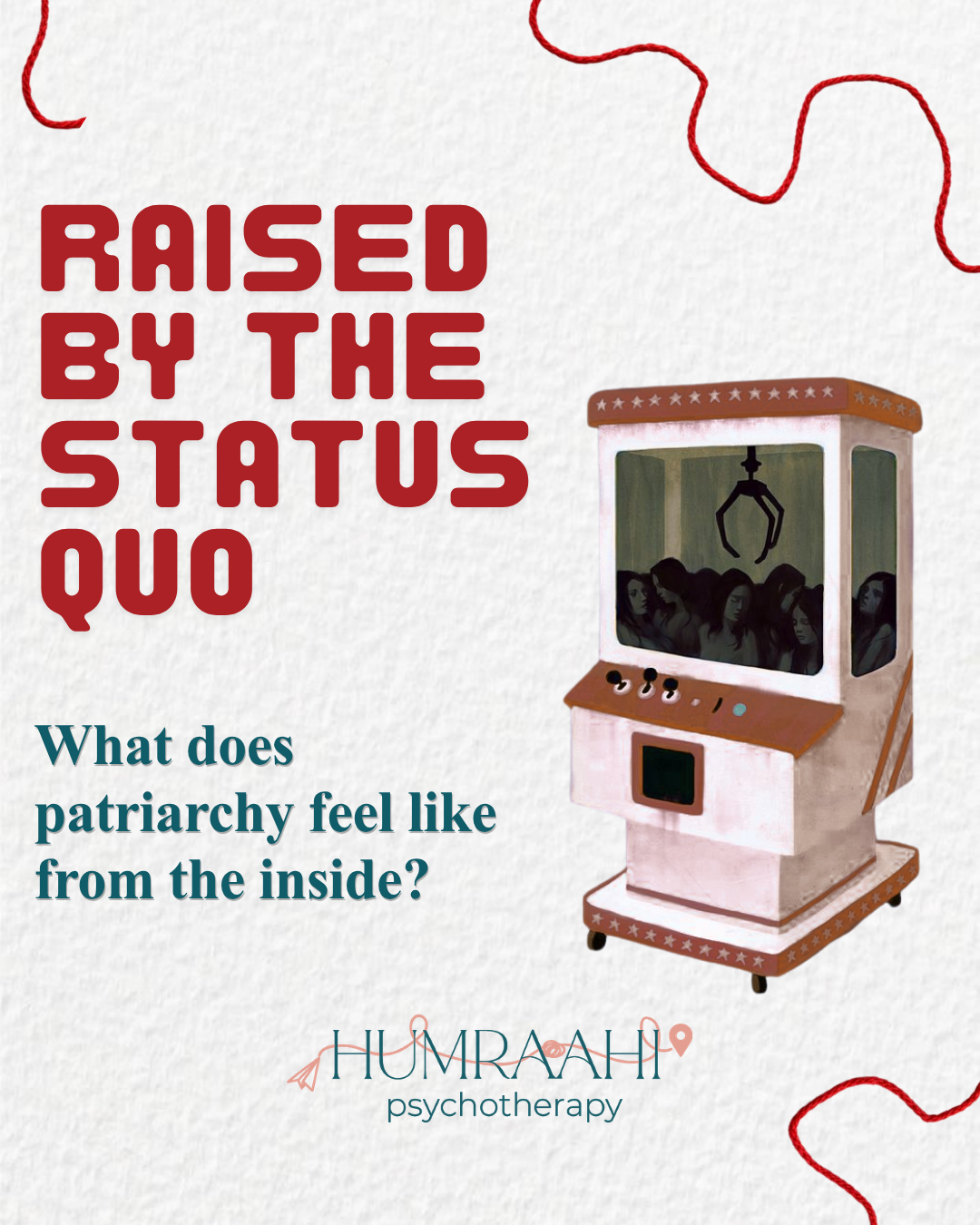
We often talk about patriarchy through what it does: restricts, discriminates, excludes, objectifies, controls. But what happens when we turn the question inward?
What does a social system feel like when you have spent your entire life learning its rules?
It can feel like learning to monitor yourself before anyone else has to. Like knowing which parts of yourself will be rewarded and which will make you difficult, undesirable, weak, threatening, or unsafe.
For women, it might be the constant calculation of how much space is too much. How attractive is too attractive? How assertive is too assertive? How angry can I be before I become difficult? How much care can I ask for before I become needy?
For men, it might be the pressure to be competent, sexually successful, financially capable, physically strong, emotionally contained. To need less. To know what to do. To be the person who can handle it.
And these rules don't necessarily announce themselves as patriarchy. They can arrive as anxiety, shame, competitiveness, resentment, perfectionism, loneliness, people-pleasing, entitlement, body dissatisfaction, fear of rejection, difficulty asking for help.
That's what makes them difficult to see.
The system becomes intimate. It enters our relationships, our bodies, our friendships, our desires, our ideas about success. It shapes not only how we treat one another, but what we expect from ourselves.
We may begin to confuse adaptation with identity.
The woman who learned to anticipate everyone's needs may come to understand herself as naturally caring. The man who learned to suppress vulnerability may come to understand himself as independent. The person who learned that desirability offers safety may experience being wanted as essential to being worthy. The person who learned that competence earns respect may find it almost unbearable to not know what to do.
None of this means that our personalities are secretly just patriarchy in disguise. Nor does recognising social conditioning mean that individual agency disappears. Perhaps the more uncomfortable question becomes: What parts of ourselves have we mistaken for personality when they might also be adaptations to the world we were taught to live in?
To say that patriarchy shapes everyone is not to say that everyone experiences it in the same way. People occupy very different positions within systems of power. Gender intersects with caste, class, sexuality, disability, race, age, religion and other forms of social location. Some people are more constrained by particular rules; others are more protected by them. Some are punished for breaking them; others are rewarded for enforcing them.
The psychological consequences of a system are not distributed equally simply because everyone lives within it.
But even those who benefit from a system can be shaped by what it asks of them. Perhaps, then, the work isn't only about identifying patriarchal beliefs and replacing them with better ones. It is about becoming curious about the rules that have become so ordinary that we no longer recognise them as rules.
What has patriarchy taught us to feel? What has it taught us to fear? What has it taught us to desire? What has it taught us to perform? What has it taught us to hide? What has it taught us to protect? And perhaps most importantly: What parts of ourselves become possible when we no longer have to organise our lives around those rules?