
How We Talk About Suicide Can Make A Real Difference
Talking about suicide can feel frightening, but compassionate conversations have the power to save lives. This piece explores how listening without judgment, validating someone's pain, and simply staying present can reduce shame and isolation. Rather than trying to find the perfect words, we are invited to meet people with empathy, curiosity, and the reminder that no one should have to carry unbearable pain alone.
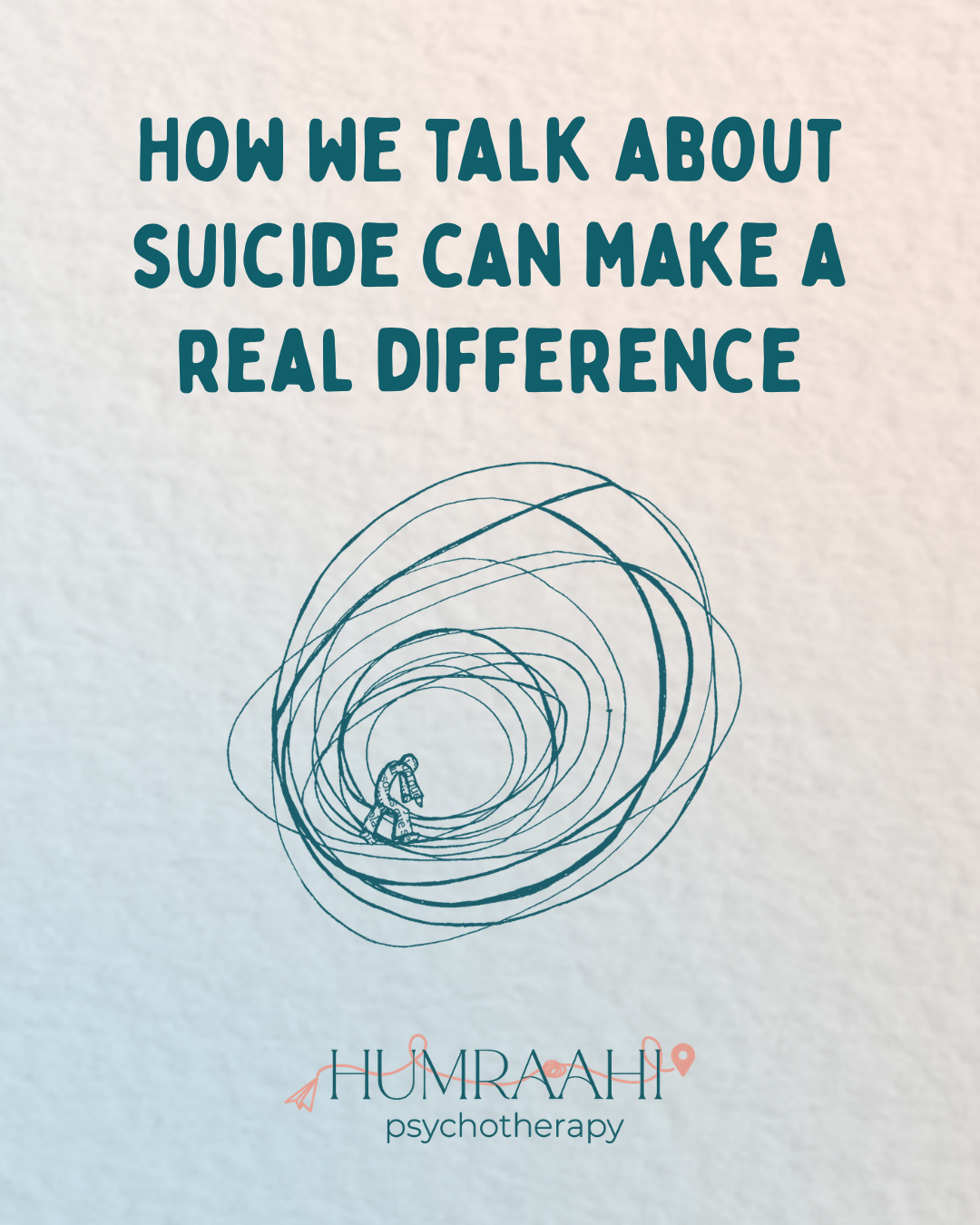
It can feel scary to ask about suicide.
What if we say the wrong thing?
What if I make it worse?
Because we care so deeply, silence sometimes feels safer. But silence can feel like a void to the person struggling.
Even well-meaning words can hurt when someone is in pain. Here: Impact > Intent
Saying things like:
“But you have so much to live for.”
“Don’t think like that.”
“It could be worse.”
often feel dismissive or invalidating.
The truth is, we are all human, and PRESENCE makes a difference.
Sometimes words fail, but showing up and staying with someone in their pain communicates what language cannot: You are not alone.
Support does not mean fixing; it’s about co-bearing what feels unbearable.
It’s about letting your love shine amidst the darkness, and being vulnerable enough to say, “Help me help you.”
Open, non-judgmental conversations reduce suicide risk.
Myth: Asking about suicide puts the idea in someone’s head.
Reality: Studies consistently show the opposite - asking directly does not increase risk.
Showing empathy goes beyond merely voicing worry or concern.
Validation involves acknowledging the truth of someone’s suffering without downplaying it.
In this way, empathy reduces harm by removing shame and isolation, and instead affirms: your feelings make sense, you matter, and you don’t have to carry this alone.
Making Conversations more Accessible
Use validating language: “I hear you, that sounds really painful.”
Ask with consent: “Is it okay if I ask directly about suicide?”
Fit the context: consider culture, gender, disability, caste/class, queerness.
Empower choices: offer options, don’t dictate.
Create safety: no judgment, no rushing, no minimising.
Listen for both what’s said and unsaid.
Silence isolates. Conversation connects.
Presence and your willingness to be with someone in their hardest moments can open the door to life-saving support.