
Helplessness As Early-Career Therapists: A Silent Struggle
For many early-career therapists, one of the hardest lessons is learning that helping doesn't always mean having the answers. This reflective piece explores the helplessness that often accompanies therapeutic work, and how simply bearing witness to another person's pain can be one of the most meaningful and healing acts a therapist can offer.
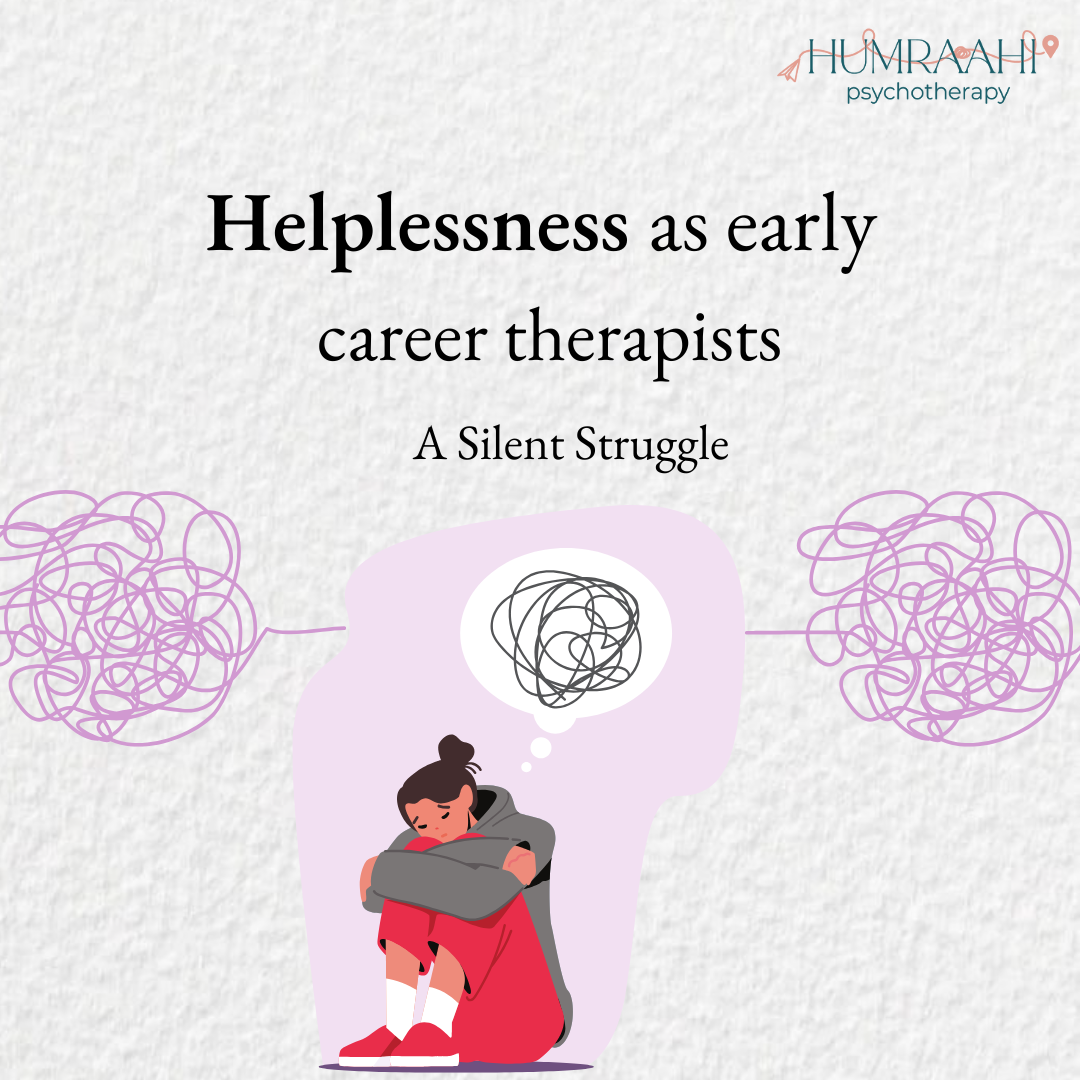
Entering the field of mental health care is a profound journey, often driven by a deep desire to help others. However, early career mental health professionals frequently encounter a pervasive sense of helplessness that is seldom discussed openly.
One of the most significant challenges I faced as an early career mental health professional was the feeling of helplessness. Despite years of rigorous training and education, I felt ill-prepared to cope with the helplessness that arose when witnessing clients’ experiences. This stemmed from unpredictability of human behaviour, the limitations of therapeutic interventions, and the inherent uncertainty in life outcomes.
The transition from theoretical knowledge to practical application revealed a gap that no amount of classroom learning can bridge entirely. The reality of sitting with clients as they share their deepest traumas, fears, and pain is a stark contrast to the controlled environment of academic training. Therapists often find themselves on the front lines of human suffering, bearing witness to the raw, unfiltered grief and pain of their clients.
The stories of trauma, loss, and despair that clients share can be overwhelming, and the therapist's role is to hold space for these narratives without being consumed by them.
Oftentimes ‘holding space’ means merely bearing witness to their grief and pain, and it’s crucial that we honour their vulnerability in these moments by not simply jumping to solutions. Honouring this process is a fundamental part of the therapeutic work and essential for building trust and facilitating healing.
As an early career therapist, I’ve often struggled with this as it adds to my sense of helplessness and inadequacy (which I’ve taken up in supervision often). It’s taken me a while to realise that the act of witnessing—being fully present with clients as they navigate their struggles—is a powerful therapeutic tool. It helps clients feel seen and heard, which is often a crucial first step in their healing process.