
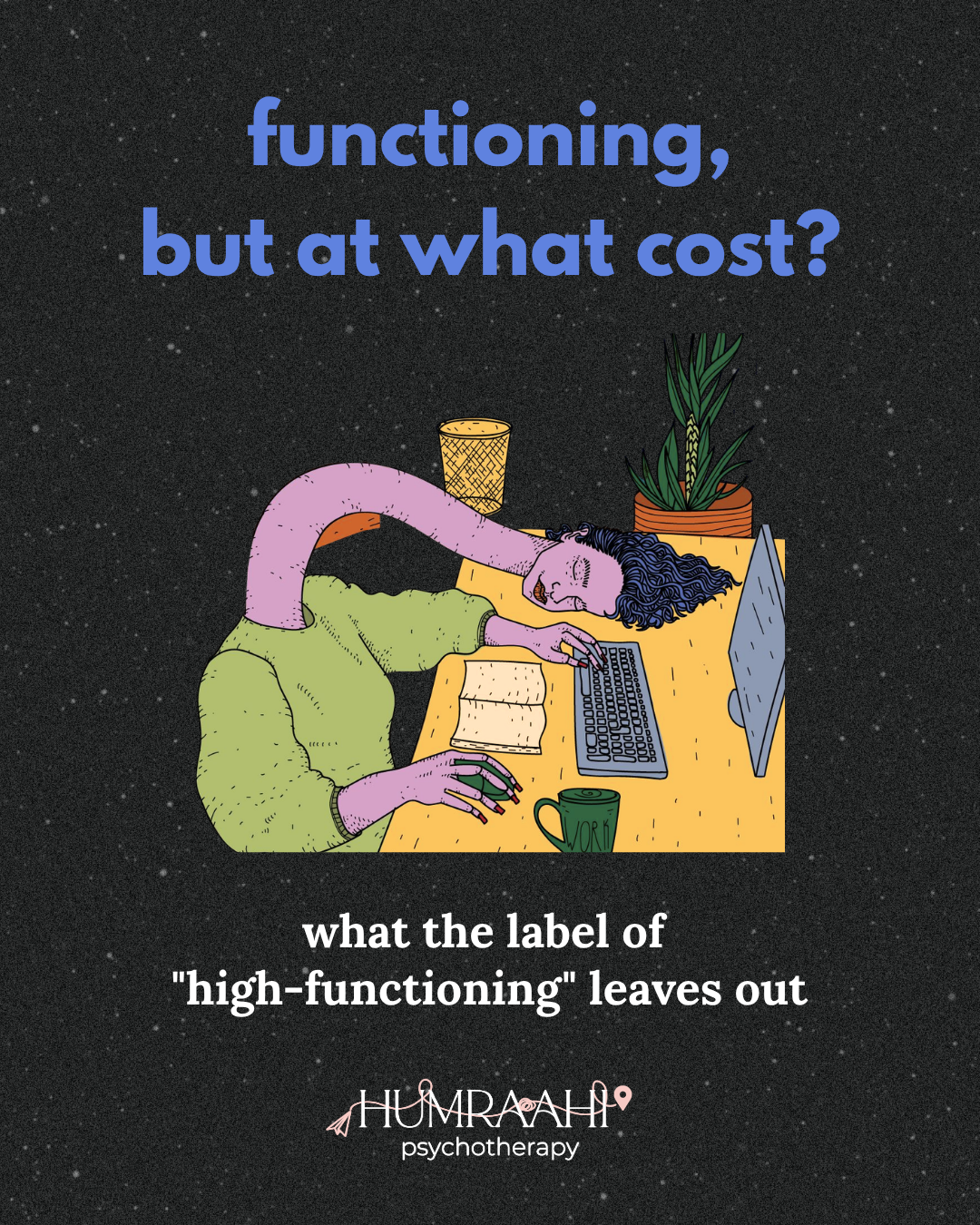
Functioning, But At What Cost?: What the Label of "High-functioning" Leaves Out
What does it really mean to be "high-functioning"? This piece questions the labels we use to describe mental health, exploring how they often reduce complex lived experiences to outward performance. It reflects on the invisible effort behind everyday functioning, the emotional cost of appearing "okay," and why care should not depend on how visibly someone is struggling.
"You seem to be doing well."
For many people living with chronic mental health concerns, this can be both true and incomplete.
Lately, I find myself questioning the very label of “functioning.”
Someone may be going to work, replying to messages, meeting deadlines, showing up for loved ones, or smiling through a conversation. From the outside, they may appear to be "functioning."
But the label of “functioning” tells us very little about what it costs.
What narrative is the label then building for us?
It doesn't tell us about the hours spent convincing yourself to get out of bed.
The careful planning behind each day.
The energy it takes to navigate anxiety, depression, trauma, OCD, bipolar disorder, or other ongoing mental health concerns while trying to meet the expectations of everyday life.
Sometimes, "high-functioning" becomes a way of saying, your struggle is not visible enough for me to notice, and thereby, it isn’t acknowledged.
When we describe people as "high-functioning" or "low-functioning," we turn deeply nuanced human experiences into categories of performance. Of utility.
These labels leave little room for complexity, overlooking the many invisible ways people struggle, adapt, and endure.
People are more than how well they appear to cope.
We hope to create spaces where experiences don't have to become crises before they are met with care, and where people don't have to prove they are struggling in order to belong.