
Can My Therapist Understand Me If They Haven’t Lived My Experience?
Can a therapist truly understand you without having lived through the same experiences? This piece explores a common fear many people carry into therapy: the longing to feel deeply understood and the belief that only shared lived experience can make that possible. It reflects on what empathy, therapeutic presence, and genuine curiosity offer beyond personal similarity, and how feeling understood is built through the relationship—not simply through shared histories.
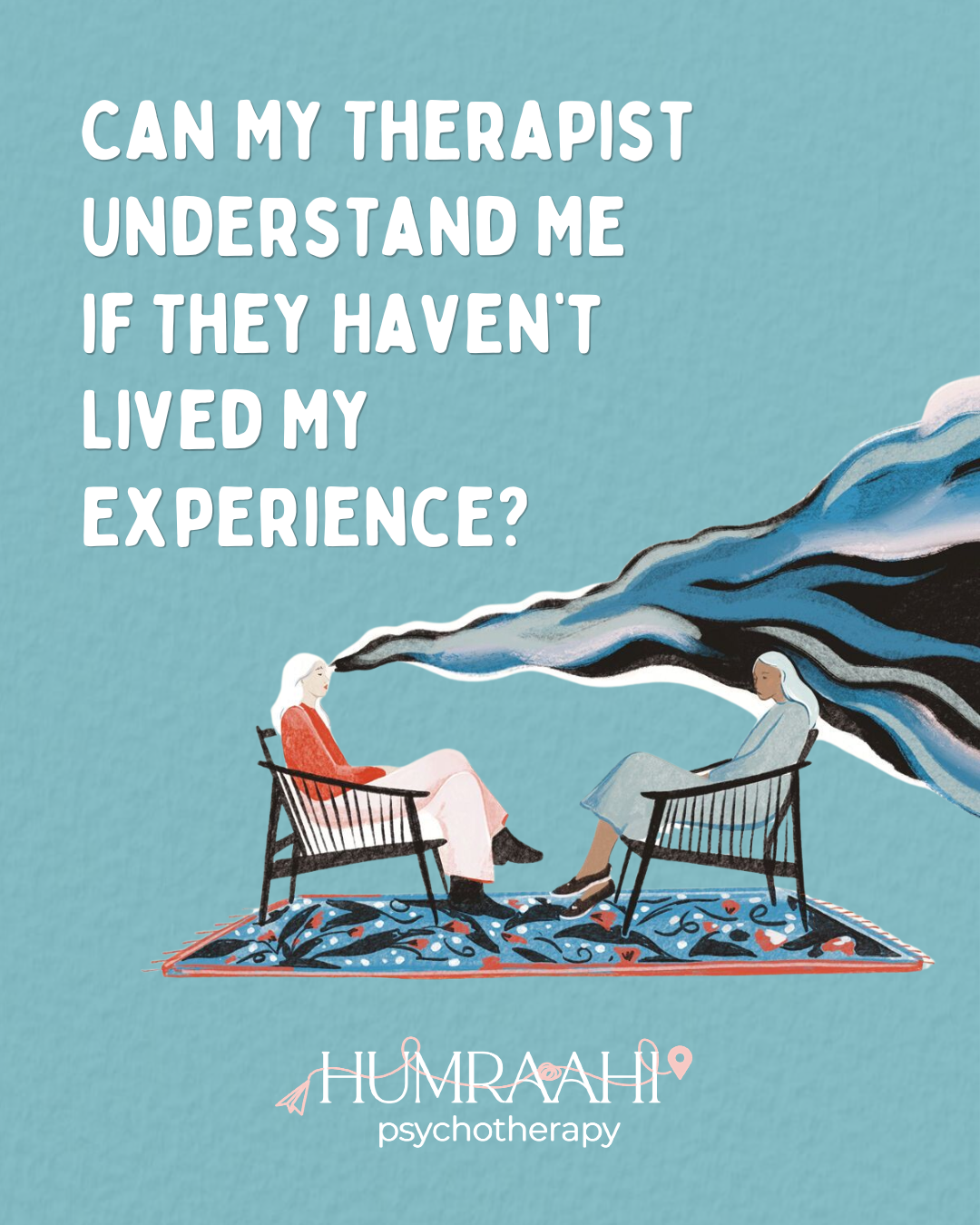
One of the most painful and gut-wrenching feelings we can experience comes from the loneliness of having shared a vulnerable piece of ourselves with someone, and it being met with doubt, scrutiny or indifference.
You would hope that the person listening to you is able to carry the weight and gravity of what you’ve told them. Sometimes, they don't want to. Other times, they try but still fall short. Either way, we’re left with a gap in our souls that craves comfort, nourishment and visibility.
We carry these same fears when we think of beginning therapy. We know that we’re walking in with a caseload of core memories, traumas, fears, discomforts and afflictions.
Can I truly be met where I am?
In doing so, we also ask ourselves whether we can really be understood and known by a therapist who hasn’t experienced what we have been through.
Often, this can look like you wanting a therapist who has been through a specific painful event- like death, divorce or infidelity, as some examples. Other times, you’d want a senior or older therapist, one who has experienced the different phases of life and adulthood and can probably access some memories where they must have felt the same way that you do right now.
You want to hear the four golden words: “I’ve been there too”.
This isn’t an unreasonable way of deciding your comfort in therapy. Yet, you wouldn’t choose a dentist based on whether they’ve had cavities in the past- because it doesn’t take a personal lived experience to acknowledge that drilling your teeth is a horrific and unsettling experience.
Therapists spend years studying the human condition in its many forms. Grief, loneliness, trauma, depression, insecurity, conflict, and abuse, among many others, are explored and known for the consequences it creates- both functionally and emotionally.
Even still, therapists don’t just walk away with a textbook knowledge of these conditions- they develop the soft skills to be able sit with your experience in ways that make you feel you are held, acknowledged and heard.
While we’re unable to do this perfectly each time, we try to do it enough times that you nevertheless feel safe within the space.
After all, just because you and your therapist may have gone through a similar event, it doesn’t mean that your subjective experiences have been the same.
The curiosity must exist nevertheless.
Therapy is also a two-way street, which means that you can express your feelings about not feeling understood or empathised with.
Any therapist who claims to build a safe space will engage with this feeling more carefully and deeply.
"Tell me more. Help me understand you better.”
Therapy (and life) can begin to feel quite restrictive if we limit our interactions to people who have had the same experiences as us.
While our intentions might be to protect ourselves from feeling injured, we actually open ourselves up to better connections when we focus our attention on building diverse relationships where we can say
“I feel understood”.